Gold vs S&P 500
What I’ve Learned Trading Gold and S&P 500

Gold bracelet
in yellow and red gold
Private Collection
© Max Gold 2026
Gold and Trading S&P 500
I traded the S&P 500 Futures contract, the E-mini, ticker ES through a broker who connected me with ADM Investor Services and straight into the CME. I was plugged in to the Globex market and trading during the NYSE open hours.
Where was I, I was sat at a table in a holiday let in North Berwick, Scotland in the middle of winter. As well as trading I was practicing Shambhav Maharudra twice a day. Getting to this place in my life was something I never envisaged or planned.
Early Years
What got me to this point was a lifelong relationship with gold and silver that started on my parents bedroom floor in 1976. Fast forward 39 years and I’m in North Berwick fixated on trading the S&P and Nasdaq futures.
At 17, I was making gold and silver jewellery at my parents on my bedroom floor. It was 1976 and I was buying 9ct gold sheet and wire from bullion dealers, not scrap gold, for around £1.50 a gram. If I was buying 9ct sheet today from the same bullion dealers it would cost me £62.20 a gram – that’s an eye watering increase of 4,046.67%. Scrap and spot prices are of course lower But isn’t that long term store of value is intriguing. All you have to do is keep it — or better still, wear it.
Please support our work by considering AvaTrade our affiliate partners. Step into global markets and trade with confidence across Stocks, Crypto, FX, Commodities, Indices and more. AVATRADE are a Highly regulated multi-asset broker. We may receive a commission.

Buying Shares
Trading evolved over two decades. From buying shares in popular, well-advertised IPO’s, General Accident 2004, Standard Life (now Aberdeen Group PLC) 2006, that sort of thing. I had no ties and a passive income from property I rented out. I had time to study and learn. I took risks I may not have taken had my circumstances been different – I had an appetite for risk and for fast profits.
Choosing a Broker
I looked at a lot of brokers and trialed many before settling in with three I have now. They need to feel right, have an easy-to-use platform, with instruments, indicators and leverage that suit you. Good customer care and be easy to quit and try somewhere else if they do not sit right. To be honest, I didn’t know what I was looking for at first. It was very much about looking at what was going on and how can I make this work for me.
Outcome Bias
One of the ironies of trading and investing is that you can learn to read company accounts, attend courses, study the market, spend hours on screen, analyse charts, do the hard work. But what does it all mean when you make a good decision that has bad outcome and a bad decision that has a good outcome. The markets will teach you about this and give you deep psychological challenges.
During the crash of 2007 I bought Bank of America shares on the premise that ‘they’ would never let the mighty BoA go under – a bad decision with a good outcome, the price went up. In 2015 the Swiss National Bank unexpectedly and suddenly announced it was de-pegging form the GBP – Boom for currency pairs CHF/GBP. The franc went through the roof, my GBP trade went through the floor — blew up my account. That was a good decision with a bad outcome. Holding onto your money takes priority over making money in trading.
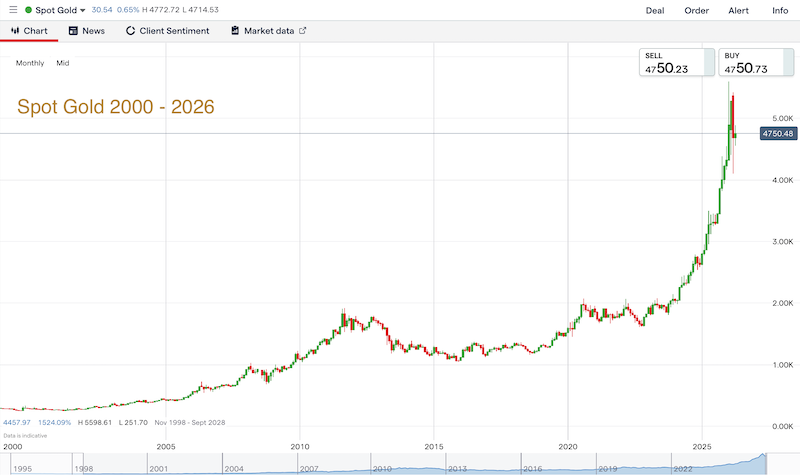
Gold has increased about 3,600% since 1976
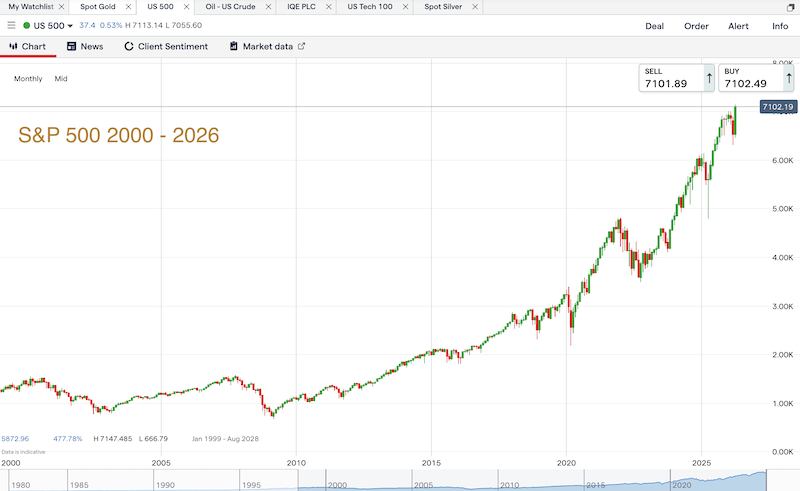
The S&P has increased about 4,233% since 1976
ETF’s
Longer term, lower risk investment options include ETF’s. An ETF, Exchange Traded Fund is a type of investment fund that pools money to buy a diversified portfolio of assets. They can be traded on stock exchanges like shares.
S&P 500 ETF
Tracks the S&P 500 index, allowing investors to buy a single, tradable asset to instantly diversify across roughly 500 of the largest publicly traded companies in the US.
Gold ETF
Tracks the domestic price fluctuations of physical gold without storing physical gold bullion. They represent ownership of physical gold securely stored in vaults.
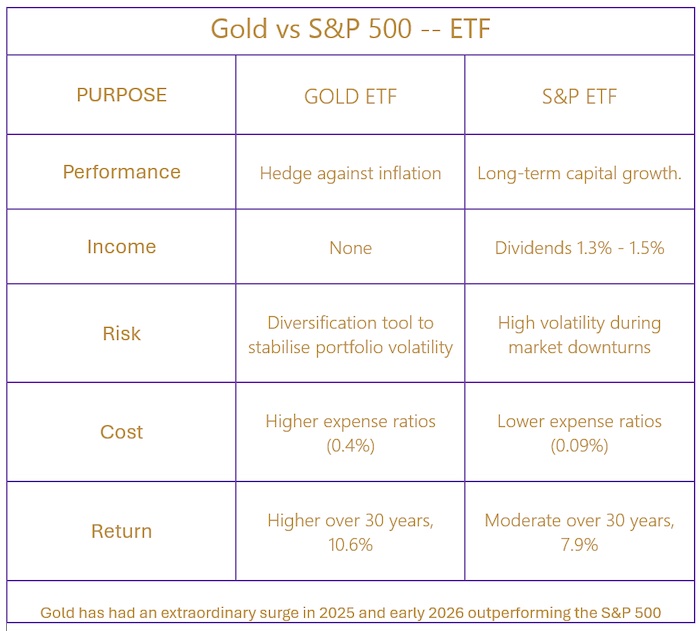
Long term, 10+ years the S&P 500 historically provides higher overall returns.
Short term/crisis, gold frequently serves as a safe haven and can out-perform when equities fall.
Investment Criteria
For investors deciding between an S&P 500 ETF and a Gold ETF, the choice depends on balancing long-term growth against capital preservation. Historically, the S&P 500 has proven more effective for accumulating wealth, delivering approximately annualized returns over the last two decades compared to golds.
Beyond price appreciation, the S&P 500 offers income generation through dividend yields averaging in early 2026, 1.3-1.5%. Gold produces zero yield and relies solely on price increases.
However, gold remains a vital “insurance” asset, as it often appreciates during geopolitical instability, high inflation, or market crashes when equities typically dip. While the S&P 500 carries higher volatility suited for those with a longer time horizon, gold’s low correlation to stocks makes it an excellent tool for diversification and volatility management.
Both assets can be held tax-efficiently within Pensions or Stocks and Shares ISAs, and both offer low-cost options through providers like Vanguard or iShares. Ultimately, an aggressive strategy favours the S&P 500 for growth, while a conservative approach increases gold allocation to protect against market downturns, suggesting that a balanced portfolio blending both assets often provides the most robust risk-adjusted returns.
Gold’s Performance
Recently, gold has been the top performer yielding over 60% in 2025 and starting 2026 strongly. Over long periods 20 years plus, the S&P can produce higher cumulative returns with compound dividend reinvestment taken into consideration. Gold often acts as a safe haven during high-inflation or geopolitical crises. The S&P 500 is generally more volatile but offers-long-term growth through economic expansion.
My crystal ball is out of action and 20 years is a long time. There are a lot of highs and lows in the market that may or may not correspond with your life needs. I had an endowment mortgage I paid into every month for 25 years. The sales pitch was, money would be invested and at the end of the term there would be enough to pay the capital (on a property). Three quarters of the way through they tell you there’s a short fall and you need to pay more. You are the source of these people’s income. They need money from you. Cynicism aside, 20 years is a long time, there are world events and your personal life events that affect your needs and returns – timing can make a difference.
Easy Money
I’ve put trading on pause while I get this website up and running and work on writing this memoir. Sitting in front of a screen waiting on the right set-up day in day out can get boring. The website is a welcome distraction, and journal. The temptation is to micro-trade. This can lead to erosion of you capital or a disastrous loss. Waiting can be hard. Timing is important.
Typically, as soon as you take your eye away look what happens. The S&P 500 has rocketed higher. It has one time-framed day on day for 14 days in a row. It’s up about 7.78% making a new record high. Making money never looked so easy, right!
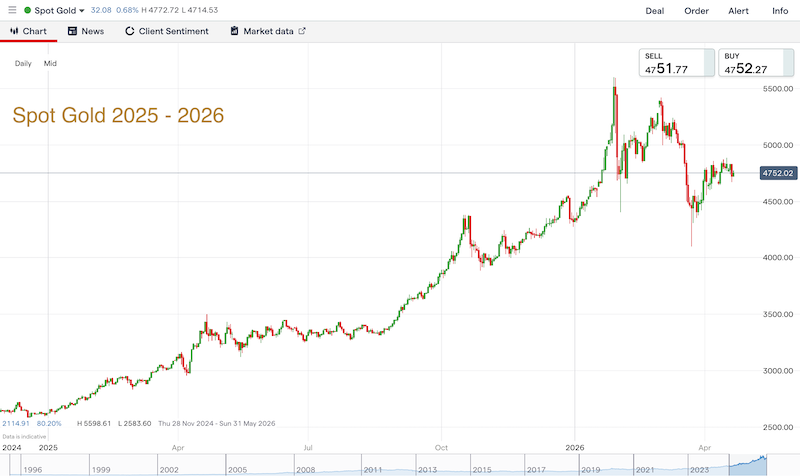
Gold has risen sharply — 2025 -2026
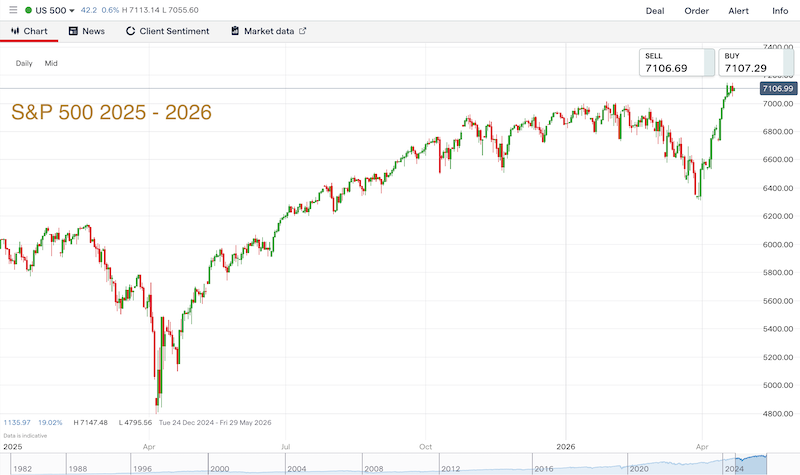
S&P 500 has take off in the past
Trading Psychology
It is easy, you can make a fortune. But you must be careful with this mindset, it is easier to lose it. Day trading is primal. You may well find yourself in a state that activates your brains emotional responses. The reptile brain takes control.
The Reptilian Brain
When things are going well, inside your brain, dopamine is rewarding you for your great trading. Dopamine is a “feel-good” neurotransmitter released in localized bursts within specific brain regions. It may motivate you to repeat this pleasurable trading experience you’re having. So, you trade more. More trading, more dopamine, more pleasure.
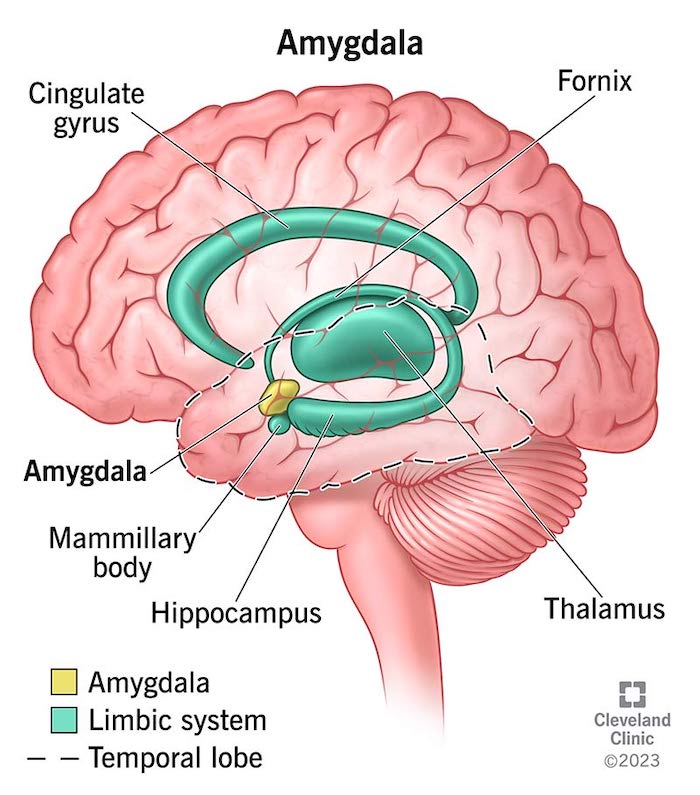
Unexpectedly there’s an uncomfortable pullback in the session and your amygdala, a small almond shaped structure inside your brain that’s part of your limbic system detects danger, causes fear — and survival takes control. You knee jerk and close your trade at a loss often when you should have stayed in.
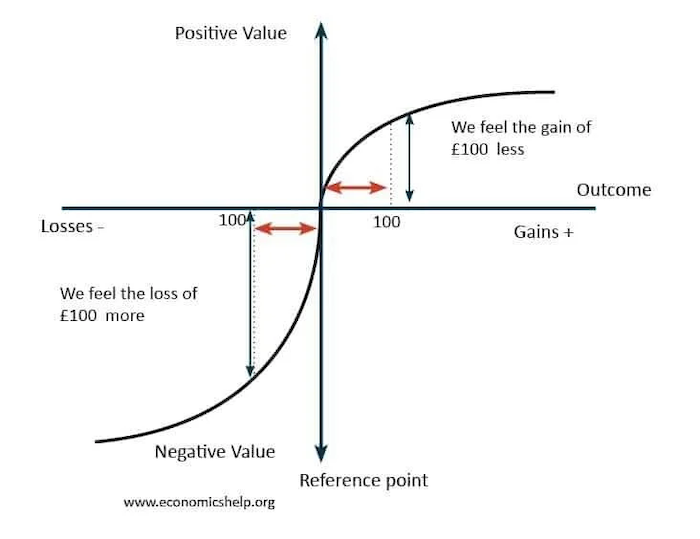
To compound the situation two influential academic psychologists Kahneman and Tversky developed a behavioural model know as Prospect Theory. It highlights that losses hurt more than equivalent gains. This can lead to risk seeking behaviour to avoid losses. In simple terms – over trading and more often than not — more losses.
Wrap Up
At 70, I’ve learned that markets don’t care about my boredom or excitement — they reward patience and discipline. Gold and the S&P 500 both have their place as does short term and long term investing. But the real winning strategy is understanding yourself first: your age, your risk tolerance, and your actual goals. Trading may take you on a journey of self-realiziation. For me in Edinburgh I will continue with both my short term investments and intermittent day trading. Freedom is being able to do what you want and I want to spend this time learning and sharing my experiences. I’m finding time away form waiting and looking at charts therapeutic. And of course I have my part-time sales job that gets be out and about.
If you’re serious about protecting and growing your money in retirement, or at any stage in your life, start small, stay consistent, and never invest in anything you don’t understand. Drop a comment below with your own experience of gold or the S&P 500 — I read every one. And if you’d like my free UK Retirement Investing Checklist, just enter your email above and I’ll send it straight over.
Thanks for reading — here’s to making smarter decisions at any age.
Newsletter
Risk Warning
— This communication is for recreational and entertainment purposes only and should not be taken as investment advice, a personal recommendation, or an offer of, or solicitation to buy or sell, any financial instruments. This material has been prepared without taking into account any particular recipient’s investment objectives or financial situation, and has not been prepared in accordance with the legal and regulatory requirements to promote independent research. Any references to past or future performance of a financial instrument, index or a packaged investment product are not, and should not be taken as, a reliable indicator of future results. Max Gold Ltd makes no representation and assumes no liability as to the accuracy or completeness of the content of this publication.